
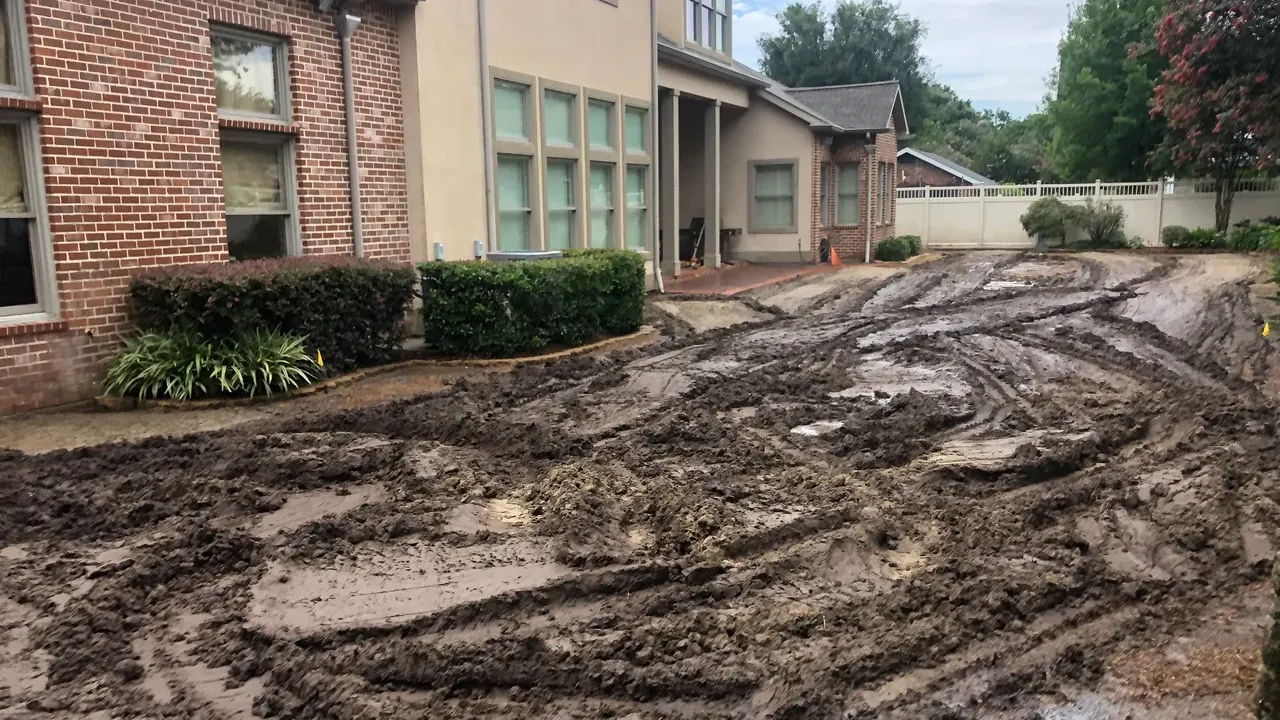
How much does grading cost in Sonoma County?
Grading a yard costs $500 to $5,000 on average in HomeGuide’s published range. Land leveling runs $0.40 to $2.00 per square foot in the same guide. HomeAdvisor puts yard leveling at $1 to $2 per square foot. At that rate, a 2,000 square foot backyard comes to $2,000 to $4,000.
These are national published ranges, and California prices often run higher. Bigger jobs can add a permit, and Permit Sonoma says most of its grading permits cost between $2,000 and $4,000. We handle grading and drainage across Sonoma County. Each job gets a written estimate after we see the site.
What does it cost to grade a yard?
HomeGuide publishes $500 to $1,000 to regrade a small lawn and $1,000 to $5,000 for an average backyard. HomeAdvisor puts regrading around a whole house at $1,000 to $3,000. Driveway grading runs $3 to $8 per square foot in HomeGuide’s range.
The table pulls the published grading ranges into one place. Every figure except the permit row is a national number.
| Grading item | Published range | Source |
|---|---|---|
| Regrading a small lawn | $500 to $1,000 | HomeGuide |
| Regrading an average backyard | $1,000 to $5,000 | HomeGuide |
| Regrading around a whole house | $1,000 to $3,000 | HomeAdvisor |
| Yard leveling | $1 to $2 per square foot | HomeAdvisor |
| Finish grading, top 1 to 3 inches of soil | $0.40 to $1.00 per square foot | HomeGuide |
| Rough grading to remove a slope | $1 to $2 per square foot | HomeGuide |
| Driveway grading | $3 to $8 per square foot | HomeGuide |
| Land grading | $17,400 to $43,600 per acre | HomeGuide |
| Fill dirt | $5 to $30 per cubic yard | HomeAdvisor |
| Topsoil | $12 to $55 per cubic yard | HomeAdvisor |
| Land survey | $375 to $750 | HomeAdvisor |
| Grading permit, unincorporated Sonoma County | Most cost $2,000 to $4,000 | Permit Sonoma |
Use the table to size the job, then get a local number. California labor and materials often run higher than these national ranges.
How much does it cost to level a yard?
HomeAdvisor puts yard leveling at $1 to $2 per square foot. HomeGuide’s land leveling range runs wider, from $0.40 to $2.00 per square foot. The low end is finish grading, which smooths the top 1 to 3 inches of soil. Rough grading removes a slope or reshapes the yard for drainage, at $1 to $2 per square foot.
Take a 2,000 square foot backyard. Finish grading at HomeGuide’s rate comes to $800 to $2,000. Rough grading at its $1 to $2 rate comes to $2,000 to $4,000, the same as HomeAdvisor’s leveling range.
HomeAdvisor says most residential yards run 5,000 to 10,000 square feet. It also advises focusing the budget on the problem areas, since few homeowners regrade the entire lawn. Leveling one low corner costs far less than reshaping the whole lot.
What does land grading cost per acre?
HomeGuide publishes $17,400 to $43,600 per acre for land grading. HomeAdvisor’s range starts at $3,000 for a fifth of an acre and can reach $45,000 for one acre. HomeAdvisor notes that those prices leave out any extra fill dirt the land needs.
Most home jobs are much smaller. HomeGuide says most residential grading projects are a quarter acre or less. It prices leveling a quarter acre home lot at $4,400 to $10,900.
What drives the price of grading?
Yard size and slope drive most of the price. HomeGuide lists yard size, soil type, slope and fill dirt as the main factors. A steep yard means more soil to cut and move. A low yard needs fill brought in, and HomeAdvisor prices fill dirt at $5 to $30 per cubic yard.
Topsoil is a separate line item. It goes on top of the fill so grass and plants can grow. HomeGuide notes that many grading contractors charge separately for fill dirt and topsoil. HomeAdvisor prices topsoil at $12 to $55 per cubic yard.
Labor is the other big piece. HomeAdvisor says pros charge between $50 and $100 per hour to reslope a yard. A job that reuses the soil it cuts needs fewer truck trips than one that hauls soil away.
Some jobs need work on paper first. HomeAdvisor puts a land survey at $375 to $750. HomeGuide says a recent topographic survey may be required before grading. Permits and engineered plans add to the cost of bigger jobs.
When do you need a grading permit in Sonoma County?
In unincorporated Sonoma County, a grading permit is required when cut or fill exceeds 50 cubic yards. Cut or fill deeper than 3 feet needs one too. Permit Sonoma lists two more triggers, one for tall, steep cut slopes and one for fill under a structure. Any one of them is enough.
| Trigger | Permit Sonoma rule | Source |
|---|---|---|
| Volume | Cut or fill over 50 cubic yards | Permit Sonoma |
| Depth | Cut or fill deeper than 3 feet | Permit Sonoma |
| Cut slope | A cut slope over 5 feet high and steeper than 2 to 1, which is 2 feet across for each foot of rise | Permit Sonoma |
| Fill for a structure | Fill meant to support a structure or added load, when over 1 foot deep or placed on natural ground steeper than 15 percent | Permit Sonoma |
For scale, 50 cubic yards spread 6 inches deep covers about 2,700 square feet. On a hillside, the cut for a level shed pad can trip the 3 foot rule with far less soil.
Permit Sonoma offers a questionnaire, form GRD-002, to help owners check whether a project needs a permit. Starting grading before the permit is issued violates county code, and the County says it may bring penalties and fines. Work begins after a pre-construction consultation with Permit Sonoma staff. An issued permit is valid for three years.
Plan check comes first. Permit Sonoma’s goal is to return initial plan check comments within six weeks of a complete application. The fee is made up of plan check fees and permit fees. Most grading permits cost between $2,000 and $4,000.
Inside city limits, the city runs its own grading permits. In Petaluma, Santa Rosa or another city, call the building or engineering office before any soil moves. Have your address and scope ready. For work where a driveway meets the street, see our guide to driveway paving permits in Sonoma County.
When does a grading job need an engineer?
In unincorporated Sonoma County, deep or large grading needs plans from a California civil engineer. Permit Sonoma calls this Engineered Grading. Its triggers include cut or fill deeper than 3 feet and a cut slope over 5 feet high. Jobs over 5,000 cubic yards or on natural ground steeper than 15 percent also count.
Simpler permitted work is Regular Grading. The County says those plans may be prepared by the property owner or a licensed professional. A soils report from a soils engineer is required when a job departs from certain county grading standards. We check which of these rules apply before we quote.
Will regrading fix a soggy yard or a driveway that holds water?
Regrading fixes water that runs across the surface toward the house or pools in a low spot. A new slope sends that water away. Ground that stays wet because water sits in the soil is a different problem. That is where french drain installation fits, and our french drain cost guide covers those prices.
A driveway or parking area that holds water usually needs regrading before new asphalt, concrete or gravel goes down. A worn gravel driveway can be regraded and topped with fresh rock. Gravel driveway prices have their own guide.
A slope too steep to grade into usable ground may need a wall instead. We build block and stone retaining walls, and our retaining wall cost guide covers wall prices and permits.
What happens at the grading estimate?
We look at where water goes now and how much soil has to move. Then we check which permit rules apply to the address, and you get a written estimate. On the job, our grading equipment shapes the ground and plate compactors firm it up. Dump trucks and a dump trailer bring fill in or haul extra soil out.
We also prep pads for sheds, shops and equipment, and we rough and finish grade ahead of new paving. Rich’s Paving is a third generation family paving company, and we have paved Sonoma County since 1988. When you want a number for your yard, give us a call and ask for an estimate.