Asphalt vs concrete driveway: which is better for Sonoma County homes?
Both, honestly, can be the right answer, which is easy for us to say because we install both. Asphalt wins on up-front price and repairability: roughly $7 to $15 per square foot against $8 to $20 for concrete, with patches that disappear into the surface. Concrete wins on lifespan and looks: 30 to 40 years against 15 to 25, plus stamped and colored finishes asphalt cannot offer. In the North Bay, the climate arguments mostly cancel out, so the real decision comes down to budget, use and taste.
Here is the full comparison, with the local factors that national guides miss.
Asphalt vs concrete at a glance
| Asphalt | Concrete | |
|---|---|---|
| Installed cost | $7 to $15 per sq ft national; $6 to $12 in the Bay Area | $8 to $20 per sq ft; stamped or colored $14 to $25 |
| Lifespan | roughly 15 to 25 years, longer with upkeep | roughly 30 to 40 years |
| Maintenance | sealcoat every 3 to 5 years, crack filling | optional sealer, joint care, stain cleanup |
| Repairs | cheap, patches blend, can be overlaid | costly, hard to color-match, panel replacement |
| Drive-on time | about 2 to 3 days | about 7 days for cars, 28 for heavy loads |
| Summer heat | softens on the hottest days, oxidizes gray | stays hard, stays cooler-colored |
| Oil drips | dissolve in, barely visible | soak in and show |
| Looks | black, clean, uniform | broom, stamped, colored, exposed aggregate |
What does each one cost in Sonoma County?
National guides for 2026 put asphalt at $7 to $15 per square foot installed and concrete at $8 to $20, with plain broom-finish concrete at the low end and stamped or decorative work in the mid-teens and up. Bay Area asphalt quotes tend to run $6 to $12 per square foot, and local concrete pricing starts lower than the national headline numbers suggest, so the honest takeaway is a range, not a number.
For a standard 600 square foot 2 car driveway, that means asphalt usually lands in the $3,600 to $7,200 neighborhood and concrete somewhere from roughly $4,000 into five figures for decorative finishes. Site prep moves both: tear-out, soft ground, slopes and drainage cost the same money no matter which surface goes on top.
The North Bay climate changes the usual answer
Most asphalt vs concrete articles are written for places with hard winters, where freeze and thaw cycles crack concrete and flexible asphalt shrugs them off. Petaluma barely freezes. Temperatures here rarely drop below 30 degrees, there is no road salt, and the classic winter argument for either material simply does not apply.
What we have instead is a long dry summer and a wet winter. Months of sun oxidizes asphalt binder, fading it gray and turning the surface brittle, which is why sealcoating every few years earns its keep here. Concrete shrugs off the sun but shows every oil drip, and its color and finish fade slower but stain easier.
The factor that actually decides driveway lifespan in Sonoma County is the ground. USDA soil surveys map large parts of the county as clay soils that crack open in summer and swell shut in the wet season, with surface cracks that can run inches wide by late summer. Ground that moves like that will break any pavement laid over a thin base. Whichever material you pick, the money that matters most goes into excavation, base rock and compaction, plus control joints on a concrete pour.
When asphalt is the right call
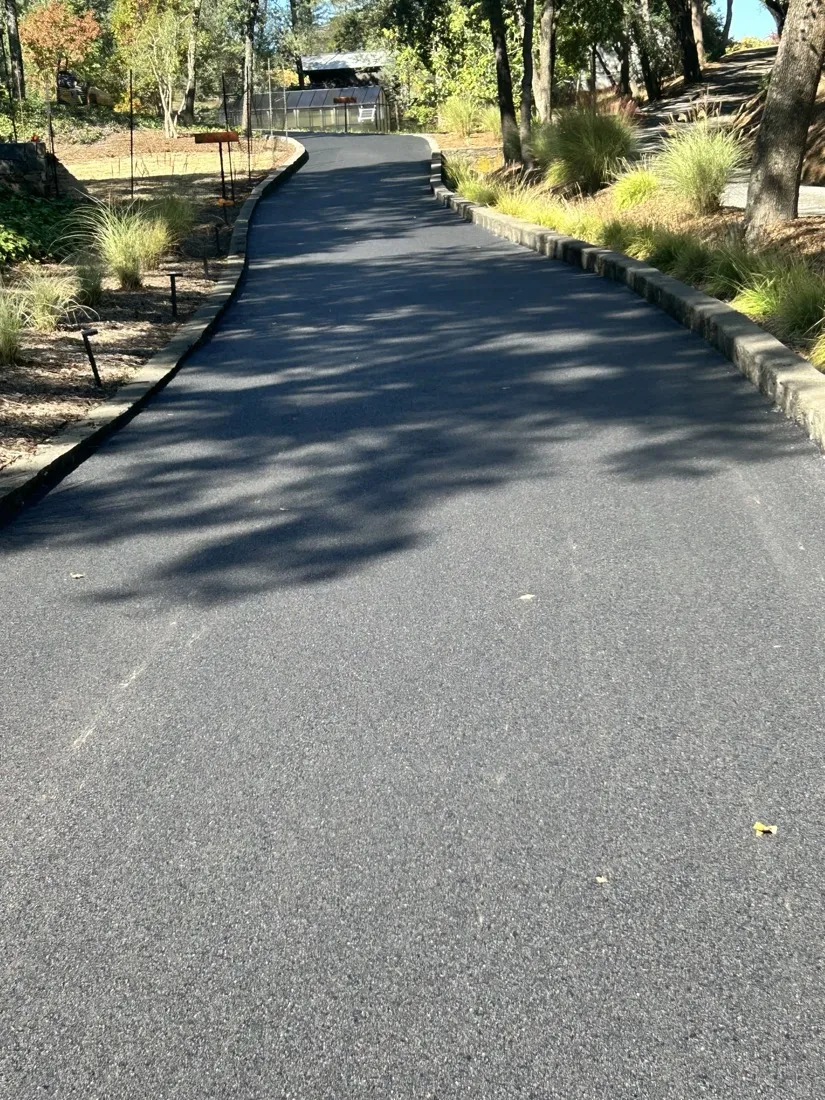
Pick asphalt when up-front budget leads, when the driveway is long, or when you want the simplest repair story. A long rural or vineyard drive is almost always asphalt or gravel, because paving hundreds of feet in concrete costs multiples more. Asphalt also suits a working household: it takes traffic within days, patches cheaply after trenching or root damage, and a tired surface can be overlaid rather than replaced. Read more on our asphalt driveway paving page.
When concrete is the right call
Pick concrete when you plan to stay for decades, when summer heat softening bothers you, or when looks matter. A concrete driveway holds a clean edge at the garage, handles hot days without going soft, and opens up finishes asphalt cannot touch: broom, exposed aggregate, color, and stamped patterns that read as stone. It asks less routine maintenance, though it wants a week of patience before you park on it and honest joint layout so the inevitable shrinkage cracks land where nobody sees them.
One more local note: some HOAs restrict driveway materials, and a few require concrete outright. Check your CC&Rs before you get quotes.
Get a straight answer for your property
Because we install both materials, you get a recommendation based on your lot: the slope, the soil, the length, what parks on it and what you want it to look like. Call (707) 217-0835 and we will look at the site, walk you through both numbers, and put the estimate in writing.