Should you resurface or replace your parking lot?
The short answer: it comes down to the base. If the ground under your asphalt is still sound, resurfacing gives you what looks like a new lot at 30 to 50 percent less than replacement. If the base has failed, an overlay is money spent covering a problem that will crack through it in a season or two. The visible test: scattered cracks and gray fading point to resurfacing; widespread alligator cracking, soft spots and ponding water point to the base, and to replacement.
Here is how to read your own lot, and what each path costs.
What each option actually is
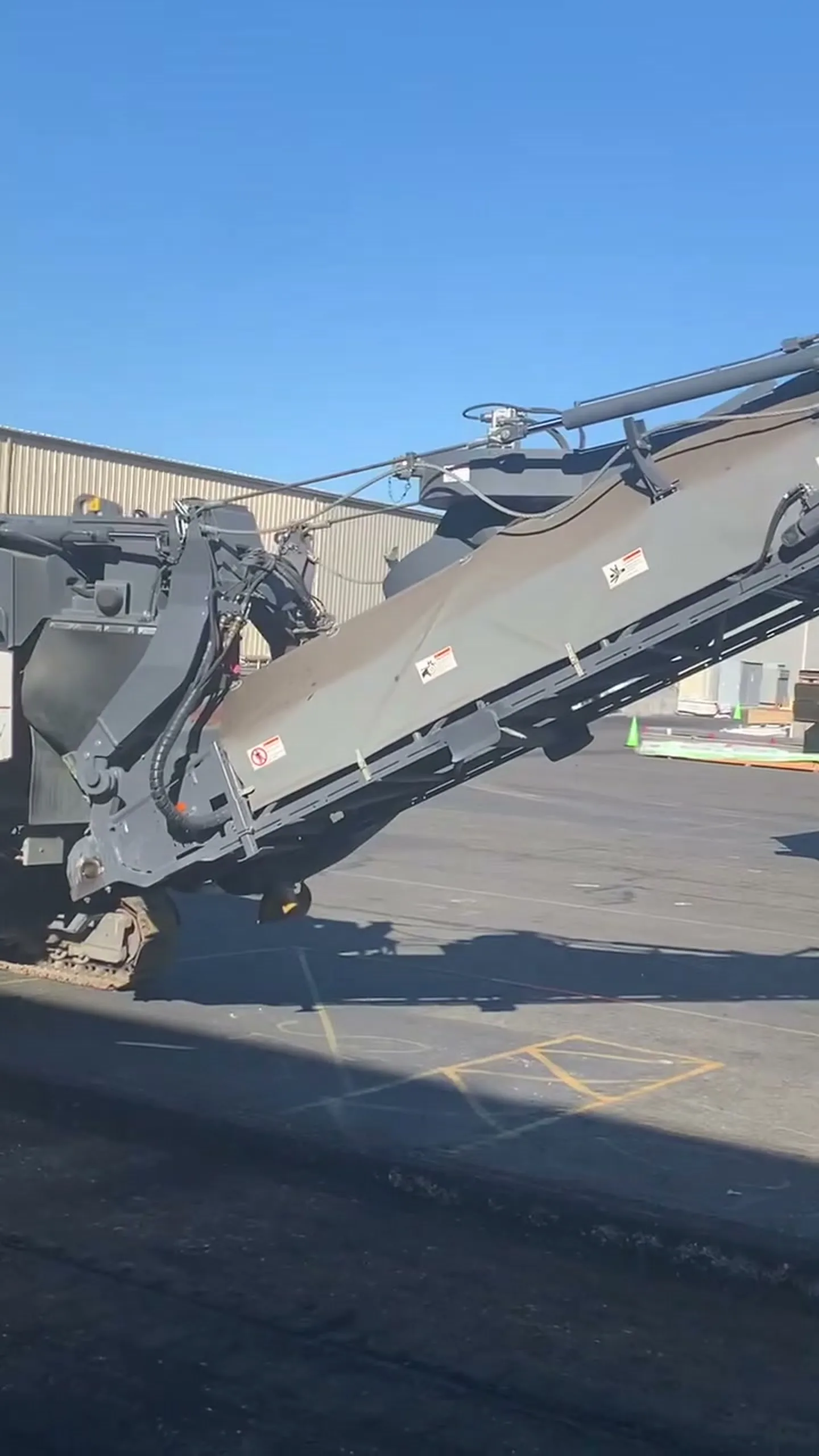
Resurfacing, also called an overlay, adds 1.5 to 3 inches of new hot mix asphalt over the existing lot. The surface gets milled where needed, cracks get filled, failed areas get patched, then the new layer goes over the top. The old asphalt becomes part of the base.
Replacement, or full depth reconstruction, removes everything down to the subgrade and rebuilds the structure, typically 4 to 6 inches of new asphalt over a rebuilt base. It is the answer when the foundation itself has failed.
Between the two sits mill and fill patching, where only the failed sections get dug out and rebuilt. On a lot with isolated problems, targeted asphalt repair plus an overlay is often the right combination.
How to tell which one your lot needs
| What you see | What it means | The fix |
|---|---|---|
| Gray, faded surface, hairline cracks | Surface aging, base fine | Sealcoat or overlay |
| Scattered cracks, minor potholes | Surface wear | Repairs plus overlay |
| Alligator cracking across areas | Base failure under the load | Patch those areas or replace |
| Ruts, soft spots after rain | Saturated or failed base | Replacement in those zones |
| Ponding that will not drain | Grade or base problem | Regrade and rebuild |
Industry guidance puts a number on it: an overlay is a candidate when less than roughly 25 to 35 percent of the surface shows structural distress. Alligator cracking is the tell that matters most, because those interconnected cracks mean the pavement is flexing on a base that can no longer support the loads, and pavement associations trace it straight to base and drainage failure. An overlay cannot rescue a failed base.
Age is the other guide. Lots 10 to 20 years old with working drainage are prime resurfacing candidates. Lots past 20, or on their second overlay, usually price out toward reconstruction.
What each path costs
Published commercial figures put overlays around $1.50 to $5 per square foot depending on region and prep, and full replacement at $3 to $8. On a 20,000 square foot lot, published examples run about $30,000 to $60,000 for an overlay against $60,000 to $160,000 for reconstruction. The overlay buys 8 to 15 years of life; reconstruction buys 20 to 30.
The cheapest path of all is the one between projects: sealcoating roughly every 3 years and sealing cracks as they appear, on the cadence our sealcoating schedule guide lays out. That maintenance history is usually the difference between a lot that qualifies for an overlay and one that needs the full rebuild. Our sealcoating service is the small line item that protects the big one.
The parts commercial owners forget
ADA compliance rides along with resurfacing. Federal accessibility guidance treats resurfacing as an alteration, which means the restriped lot must meet current standards: 1 accessible space per 25, van spaces at 1 of every 6 accessible spaces, aisles and signage included. Refreshing existing paint in place is generally maintenance. We handle the compliant layout as part of commercial paving scope, so the lot comes back both new and legal.
Phasing keeps you open. Lots get paved in sections, with each section repaired, paved, cured and restriped before the next closes. Entrances and accessible routes stay open the whole time. We plan the sequence around your hours, including night and weekend sections where daytime parking cannot flex. Businesses with East Bay commercial properties are part of our service area too; our Oakland page covers how we work across the bridge.
Find out what your lot actually needs
We walk the lot, find what is under the failures, and tell you which sections need what. Sometimes the answer is a $6,000 repair and seal instead of a $60,000 overlay, and when that is true you will hear it from us. Call (707) 217-0835 or request a parking lot estimate and we will schedule the walkthrough.